
Industry News
To search by topic, use the 'News by category' filter. To search by month and year, use the 'News by month' filter.

Demand for healthy bee colonies for pollination and declining global bee health necessitate improved hive monitoring. Horticulturalists want pollination-ready hives, and beekeepers value early intervention against disease and stress. To address these challenges, beekeepers need efficient tools for enhanced colony health monitoring. Various sensor-based tools promise beehive data like weight and internal temperature to help…

The 2024 Australian International Olive Awards (AIOA) is now open for entries, offering the chance to be named Best EVOO, Flavoured Oil or Table Olive of Show from a growing field of high-calibre international entries. Ongoing quality improvement is one of the aims of the industry’s Strategic Investment Plan and R&D priorities, and the AIOA…

A new project under the Olive levy R&D fund will monitor olive oil quality and labelling across the national supply chain. Running over the next three years, the Olive Oil Quality Monitoring Program (OL2302) aims to improve consumer confidence in Australian olive oil products by ensuring that all are true to label. The program will also ensure…

Hort Innovation has announced an ambitious goal to invest an additional $500 million over the next decade in research and development to bolster Australia’s $16.3 billion horticulture industry. The new Frontiers program will complement the existing levy-funded portfolio and will attract new investors and transformative innovation streams to Australian horticulture, with the aim to seize…

Have you seen the Olive Wellness Institute’s resource showing the different grades of olive oil? The ‘plain-speak’ one page infographic is an excellent guide to share with customers and your social media networks to explain the differences between natural olive oils like extra virgin olive oil and refined olive oils like ‘pure’ and ‘light’ olive…
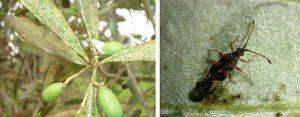
Olive Lace Bug (OLB) has been a prominent pest in many growing areas in recent times, including areas where it has not been present in significant numbers in the past. All growers should check their groves carefully for signs of OLB and act immediately if they are found. In particular, growers who use contract processors…

We all know that extra virgin olive oil is a very different product to most edible oils, most importantly for the minimal processing which goes into the production of our unique, healthy “fruit juice”. Most consumers aren’t aware of that important difference, however, so with harvest season still underway – and new season’s extra virgin…

Another hugely successful AOA Processing Course was held in South Australia in mid-April, attracting growers from across the country and overseas. Held annually, the intensive two-day course covers every aspect of processing quality olive oil, from grove management for optimal fruit quality to best-practice processing and storage. Along the way, attendees learn a lot about…

Hort Innovation has launched its annual Grower and Partner Survey and we’re all being asked to take part. As the organisation implements the Hort Innovation Strategy 2024-2026, it is seeking feedback on its performance, outcomes and more. You are invited to share your views about horticulture in Australia, growers’ on-farm practices and priority areas for…

The Australian Tree Crop Map was first imagined in 2014, when tree crop industries approached the Applied Agricultural Remote Sensing Centre (AARSC) to see whether remote sensing technology could be used to estimate the size of their respective production areas. Through Hort Innovation, the Multi‑scale monitoring tools for managing Australian tree crops project (ST19001) was…