
Health Star Ratings: join the call for evidence-aligned approach to edible oils
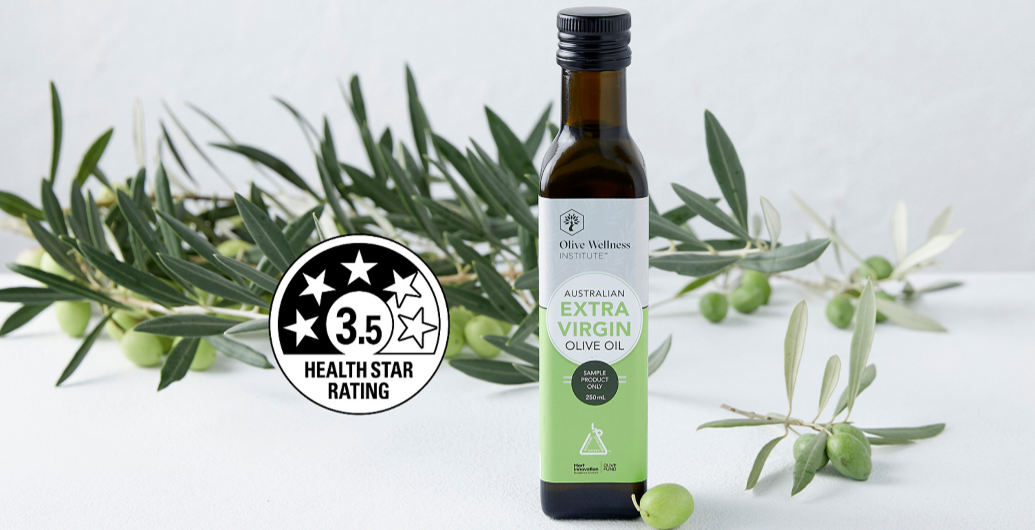
The Olive Wellness Institute has a simple and important mission: to promote the dissemination of credible science related to the health benefits of EVOO and other olive products.
So it’s not surprising that they’re currently raising a very important issue that will impact both olive producers and public health – the flagged mandating of the Australian Health Star Rating (HSR) system.
While front-of-pack labelling systems like the Health Star Rating (HSR) are designed to make healthy eating simpler by guiding shoppers to a healthier choice, when it comes to single ingredient foods like cooking oils, the HSR creates more confusion than clarity.
The current algorithm does not appropriately assess edible oils – and certainly doesn’t reflect the evidence around the health benefits of extra virgin olive oil (EVOO), which receives a lower HSR than refined oils like canola and sunflower oil.
Key problems
The OWI’s Jasmine Diamantaras explains that, as cooking oils contain negligible sugar and sodium, and are very similar in energy content, the HSR algorithm leans on saturated fat as the sole differentiator. Level of processing, bioactive compounds or well-established health benefits are not considered in the rankings.
This is why EVOO typically receives 3-3.5 stars while refined oils like canola and sunflower may receive 4-4.5.
For health professionals this creates a very real clinical challenge: continuing to follow best practice guidelines and recommend EVOO as the healthiest cooking oil will conflict with the message conveyed by the HSR system. Such inconsistency risks further confusing the public and may even erode trust in the HSR system, ultimately undermining its effectiveness as a nutrition guidance tool.
What you can do
FSANZ is currently reviewing a proposal to mandate the HSR and has invited public and stakeholder input into standard setting processes.
We know that category-specific adjustment to the HSR system is possible, as improvements have been made in the past where there were obvious errors in the algorithm – dairy products is one example.
So add your voice by making a submission to support a more evidence-aligned approach to assessing the HSR for edible oils. There’s more information on what to include here. You can also email the OWI team at [email protected] if you have any questions.
Then provide your feedback to FSANZ here by 21 June.