
Olive Lace Bug alert
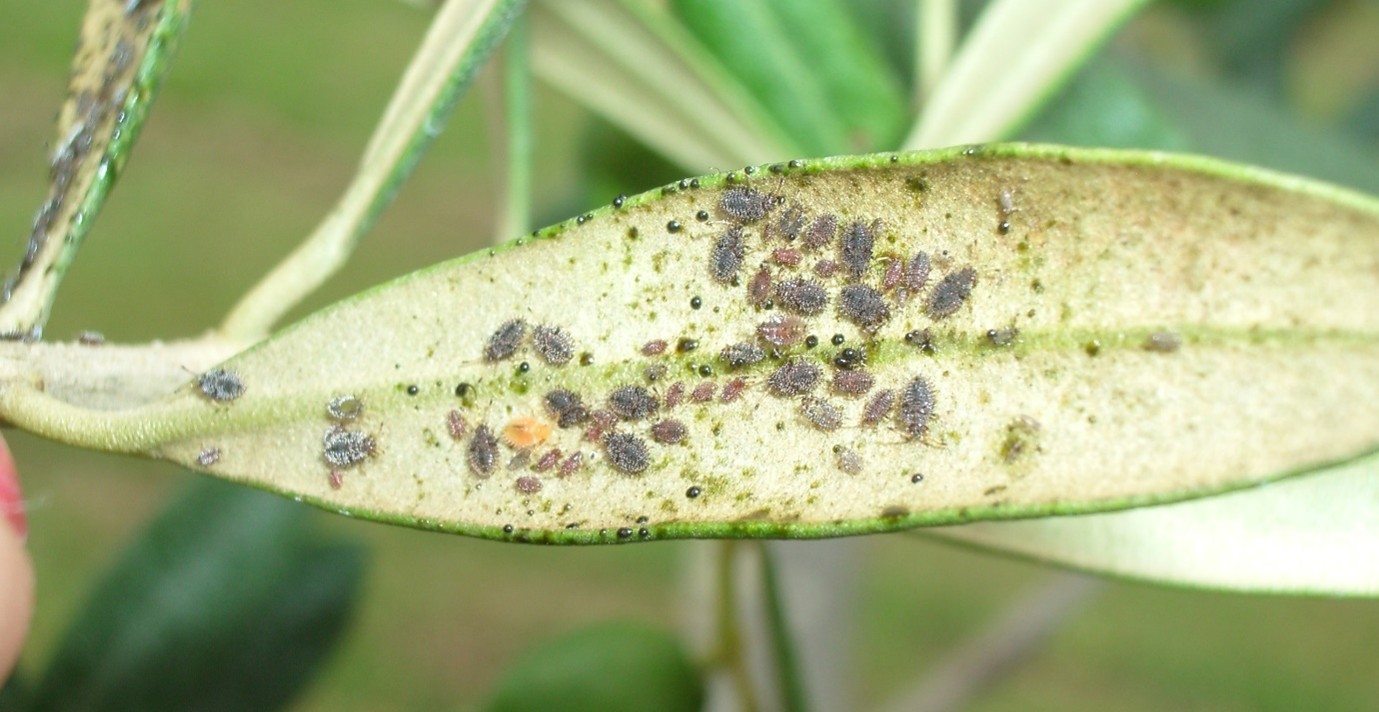
It’s now time to be checking your groves for olive lace bug infestations.
Dr Robert Spooner-Hart, the AOA’s Scientific Adviser on Sustainable Pest Management, has noted the emergence of young lace bug nymphs over the past few weeks. This is the commencement of the first generation of normally three generations per season, and is the most critical one to target.
Spooner-Hart said the second generations usually emerge around the Christmas-New Year period, and the third generations in autumn. Catching the first generation of immature bugs (before they reach adulthood) prevents buildup of heavy infestations later in the season, which cause more damage and are much more difficult to manage.
What to look for
The emerging, highly-spined nymphs are present in clusters on the undersides of leaves, piercing them and feeding on cell contents, resulting in leaves with yellow spotting and sticky dark spots. In heavy infestations, the leaves become totally yellow and fall. Twig and branch dieback may also occur in severe infestations, and flowering and fruiting can be delayed for a year or more.
There are five nymphal (immature) stages, with the later two (4th and 5th instars) showing developing wing buds.
There are a range of management options: maintenance of good tree health and open canopy trees, along with good farm biosecurity, are the starting points; removing and destroying infested branches if infestations are light is the next step; a range of registered organic and conventional insecticide options are available where infestations are more severe.
“Effective monitoring should detect lace bug ‘hot spots’, which should then be targeted for management and further monitoring.” Spooner-Hart said.
“We strongly recommend against spraying an entire grove, when unnecessary.”
More information
Information on all current pesticide options for olive pests and diseases is available on the APVMA website: for registered products here; and those not registered but permitted for use here, using the search term Host: Olive.
Further information on Olive Lace Bug is also available on the Australian Olive Association website here.
Chemical treatment trials
In-grove trials of a new chemical treatment for olive lace bug are currently being planned. If you have lace bug on your property and are willing to take part, please register your interest by emailing [email protected].
And for all growers reading this, move pest and disease monitoring to the top of your grove maintenance action list – and get out there and look!