
Be aware, not alarmed: Stay snake-smart in the grove
By Laura Thomas
Australia is famously home to some of the deadliest snakes on the planet and as farmers, we’re much more at risk of a surprise encounter than our city-dwelling cousins.
Warmer temperatures, good winter rains, plenty of long grass, mice, bugs and other critters have provided the perfect seasonal awakening for many snake species, as they become more active, looking for food, water and mates.
Australia is home to 140 species of land snake. Around 100 of these are venomous and just 12 are likely to inflict a wound that could kill, according to Environment NSW.
And while each species is important for biodiversity and the health of our environment, most of us would prefer to keep well out of their way.
And for good reason.
More than 2,100 people were hospitalised due to snake-bite in 2024-25, according to the Australian Institute of Health and Welfare.
Thankfully, fatality remains rare.
So how can we keep run-ins with our scaley, cold-blooded friends to a minimum?
- Keep it neat: Like all wild creatures, snakes are attracted to a reliable source of water, food and shelter. Help move them on by keeping your property neat, clutter-free and promptly remove any rubbish, food and organic waste. If you do need to store rubbish onsite, keep it in a bin with a secure lid.
- Reduce overgrowth: Regular mowing, weed spraying and trimming will keep vegetation – and potential snake hiding places – to a minimum. For producers who encourage vegetation growth in their groves over summer, vigilance will be even more important.
- Minimise hiding places: Snakes love to hide in equipment and among materials often stored on farms. Be alert when moving seldom-used machinery and equipment such as tanks, corrugated iron and firewood.
- Control rodents: Store animal feed in sealed containers to avoid attracting mice and rats, which provide an irresistible treat for a hungry snake.
- Snake-proof your place: Keep slithery visitors outside where they belong by sealing up any snake-sized gaps in walls, doors and windows.
- Be aware, not alarmed: Watch your step when working in and moving around the grove, especially in long grass or dark, quiet outdoor storage areas and shedding, where snakes like to curl up and hide. Most snakes just want to be left alone, so give them plenty of space to move on.
- PPE: Make sure you wear long trousers and boots when out in the grove. While you might be tempted to bring out your shorts and double-pluggers as the warm weather hits, they provide zero protection from the fangs of a feisty king brown.
- Stay connected: Keep your mobile phone or UHF radio in arm’s reach when out and about so you can call for help without moving if a snake-bite emergency strikes.
- Apply first aid: Keep a snake-bite first aid kit with compression bandage on-hand when out working in the grove and ensure you know what to do in an emergency.
Snake bite first aid
Being prepared for and understanding snake bite first aid is important for anyone who works outdoors and especially those living in rural Australia.
Download St John First Aid Snake Bite Fact Sheet and make sure you know what to do.
Download the Australian Bites and Stings App
The free app and provides information on Australia’s unique venomous creatures and the correct first aid to apply to a venomous bite or sting – available on your mobile, even when you’re offline.
Visit the website for educational resources for your grove or worksite, more information and to download the app.
Sources:
www.environment.nsw.gov.au/
www.aihw.gov.au/
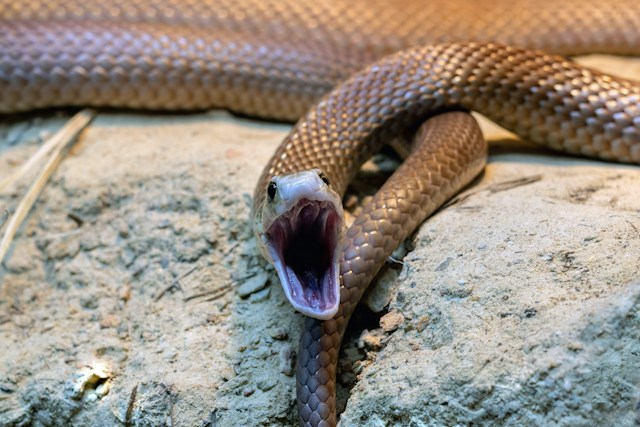
Image: An Eastern Brown Snake (David Clode, Unsplash).